Infrasonic Vibrations
The mysterious world of frequencies below human hearing.
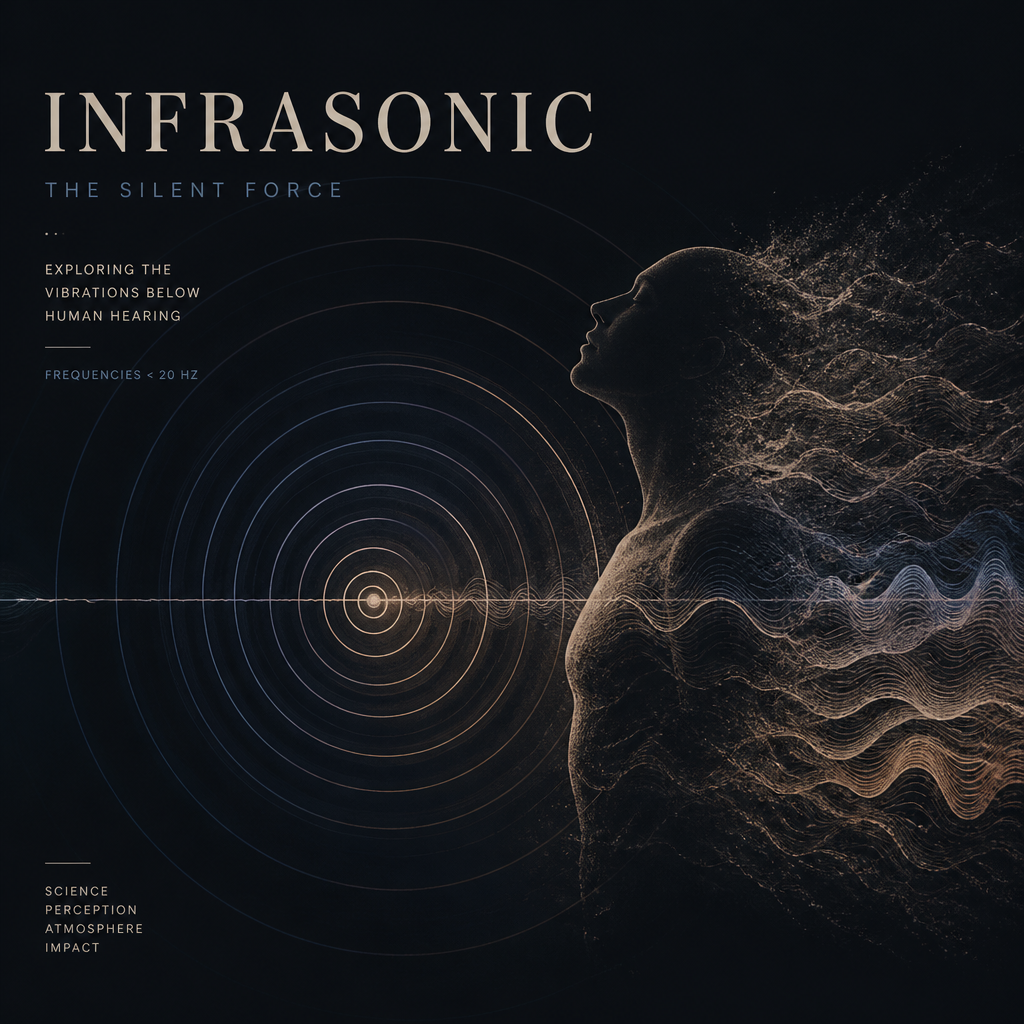
Human beings have always been producers of sound. While vocal cords are the primary instruments of sound production, our bodies also generate sonic signals through muscles and other organs — often at frequencies lower than what the human ear can detect.
Clench your fists and place your thumbs in your ear canals: the distant rumbling is the result of muscle contractions. Such sounds, with frequencies below 20 Hz, are termed infrasonic vibrations. While generally inaudible, their vibrational energy can be sensed.
Origins of infrasonic vibrations
The body produces infrasonic vibrations through heartbeats, blood flow, and the rhythmic movements of breathing. Pioneering 1950s work by Oster and Jaffe with transistorized stethoscopes revealed that muscle load intensifies these sounds, and that sonic signal generation is an inherent property of skeletal muscles. Grimaldi first documented the phenomenon in 1665; later, Herroun and Yeo found electrical stimulation generates sound waves similar to voluntary movement.
Other sources
The heart resonates at close to 1 Hz, blood circulation lower still, and the brain's neuronal activity is estimated near 10 Hz.
Applications and implications
Modern instruments like the 'brain stethoscope' convert brain waves recorded on an EEG strip into audible sound — helping detect silent seizures. In the animal kingdom, pigeons use infrasonic signals for orientation and migration; elephants and whales use them for long-distance communication.
Environmental infrasound
Natural sources include wind, marine storms, geomagnetic activity and seismic phenomena. Man-made sources include diesel engines, airplanes and wind turbines. Prolonged exposure to low-frequency noise has been linked to nausea, mood changes, and even vibroacoustic disease. Not all effects are negative — low-frequency sound signals have therapeutic applications, especially in treating muscular disorders and chronic pain.
The realm of infrasonic vibrations remains relatively unexplored — a promising research area that may reveal unknown facets of our body's workings. Sound therapy aims to harness these vibrations while protecting against the potential harms of prolonged exposure to environmental low-frequency noise.